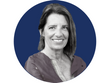
Good morning, this is Paula. A first-ever conference to assess progress on phasing out harmful chemicals opens today in Geneva. My colleague, Michelle Langrand, speaks with Sheila Aggarwal-Khan, who heads the UN Environment Programme's division urging industries to support safer practices, about the cost of the chemicals to society.
A week after staff protested job cuts announced by the incumbent head of the International Labour Organization, Gilbert Houngbo, members of the agency's governing body will file into booths today to decide if he stays on, or if Spain's labour minister nabs the role.
And at the World Health Organization, candidates vying for the top job there get grilled by member states later in the week. |

Sheila Aggarwal-Khan, director of the industry and economy division at Unep, at a conference. (ENB/IISD)
|
|
|
🗳️LABOUR CHIEF VOTE.
After months of campaigning, the two candidates vying for the top job at the UN labour agency will be on the ballots this morning, as members of the agency’s Governing Body file into voting booths at its headquarters behind closed doors.
The choice for delegates representing governments, workers and employers is between incumbent director general Togo’s Gilbert Houngbo and Spain’s labour minister Yolanda Díaz. According to the rules, the secret vote “will last for as long as required”.
|
|
Staff anger.
The election comes a week after ILO employees in Geneva staged a protest against job cuts they say staff reps were not consulted for. Under financial pressure since Washington stopped paying its dues in 2024, Houngbo announced in September that 120 positions would be cut in 2027. (RTS)
|
|
🌍COP31 CRUNCH TIME.
Logistical issues in Antalya last week left attendees fuming over intense traffic gridlock and hours-long commutes, while journalists camped out at the media centre to get to morning meetings on time. Now, negotiators at the climate talks will hunker down before the gavel goes down at the end of the week.
|
|
Electrific question.
Launched by coal-hooked Turkey, the session’s electrification agenda proposes increasing the share of electricity in global energy use to 35 per cent by 2035. The conference co-host – who shares the role with Australia – hopes to get that call into the final cover decision, an agreed document that carries political, if not legal, commitment.
Ahead of the weekend, a few countries had signed up to the pledge, albeit stressing that the push must be linked to cleaner energy. (Climate Home News)
Civil society is calling for strong fossil fuel guardrails to be part of the target.
Meanwhile, Devex found that the Cop itself is being powered by biodiesel, an even dirtier energy source than fossil fuels.
|
|
Mind the gap.
On the conference’s formal agenda, negotiators will be discussing climate finance, just days after the UN Environment Programme reported that adaptation finance fell well below the $305 billion needed annually in developing countries, with only about a tenth of that disbursed in 2024.
Leaders of climate-vulnerable countries also called last week for accessible funding to address loss and damage, as communities could not afford delays. (Anadolu Agency)
Two years after the Cop29 agreed on a new finance target of $300bn per year, with a goal to mobilise $1.3 trillion annually from both public and private sources, Brazil, last year’s Cop host, presented a blueprint for that plan to raise those funds at the start of talks in Antalya. Expect negotiators this week to closely scrutinise numbers.
|
|
🩺JOB INTERVIEWS.
On Wednesday and Thursday, seven candidates hoping to become the next head of the World Health Organization in August 2027 will be queried by member states in publicly broadcast interviews.
|
|
Who’s running.
Two months before the agency’s executive board shortlists and nominates a maximum of three candidates, those in the running are WHO regional directors Saudi Arabia’s Hanan Balkhy and Belgium’s Hans Kluge; health ministers Qatar’s Hanan Mohammed Al-Kuwari and Indonesia’s Budi Gunadi Sadikin; former WHO director of environment, climate change and health, Spain’s Maria Neira; Li Song, a senior Chinese health and women’s development official; and Gevorg Tamamyan, a paediatric oncologist backed by Botswana.
The Armenian is the only political outsider and one to have spoken up against recurring sexual misconduct at the organisation, according to Health Policy Watch.
|
|
Elevator pitch.
Candidates will have 10 minutes to present their platforms and three minutes to answer questions from delegations before being red-lighted to keep time. Those from the executive board members, who will pick the finalists, will be particularly telling.
|
|
Economy or private jets.
Guidelines set out for candidates earlier this year specify that the WHO would support travel for candidates to Geneva for the session, including economy-class tickets and a per diem, though some may stick to private jet transfers.
|
|
|
GS news is a new media project covering the world of international cooperation and development. Don’t hesitate to forward our newsletter!
Have a good day!
|

|
|
Avenue du Bouchet 2
1209 Genève
Suisse
|
|
|
|